Friday, 13 December 2013

Phishing

Phishing is a method used to obtain personal and financial information from unsuspecting individuals. While pop up messages on websites and instant messaging programs, like AOL IM, are used in phishing scams, the most common means of acquisition is by misleading emails from a third part

Prevention
  • Don’t reply to email or pop-up messages that ask for personal or financial information, and don’t click on links in the message. Don’t cut and paste a link from the message into your Web browser phishers can make links look like they go one place, but that actually send you to a different site.
  • If you are concerned about your account, contact the organization using a phone number you know to be genuine, or open a new Internet browser session and type in the company’s correct Web address yourself.
  • Use anti-virus software and a firewall, and keep them up to date.
  • Don’t email personal or financial information.
  • Review credit card and bank account statements as soon as you receive them to check for unauthorized charges.
  • Be cautious about opening any attachment or downloading any files from emails you receive, regardless of who sent them.

Analysis
Phishing is a significant crime because it has an extremely large market to target. Online bill pay, Internet shopping, and email are examples of daily occurrences that provide potential trails for stammers to follow.As current or potential future web developers, the knowledge of phishing presence and the capabilities of its evolving scams need to be taken into consideration when creating sensitive websites, as with the heavily bombarded eBay, Paypal, Yahoo, Visa, and Citibank to name a few.

As conclusion, From the first media presence of phishing, as mentioned in the Florida Times-Union newspaper in March 1997, this ever growing problem continues to evolve and match any precautions taken by its opposition. Despite the fact that these scams are getting more believable, it remains important that phishing is reported and stammers find themselves empty handed.
Considering phishing scams have only been present for nine years, with the more recent two and a half years of sophisticated traps, there has been a significant level of danger for Internet users. While organizations like APWG (Anti-Phishing Working Group) are keeping up with phishing scams, knowledge must spread through the general public of these occurrences.

By Seth 

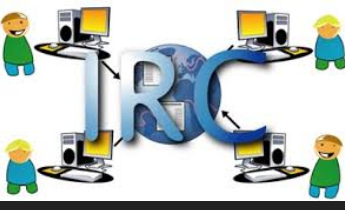
Internet Relay Chat (IRC)

It is a very popular method of instantaneous communication over the internet. The majority of this communication is done with text in a chatting channel. Users use an IRC client to connect to an IRCserver, which then allows a user to connect to a chat channel or individually message other users.
IRC has been popularized by the media as being a haven for hackers and illegal file-sharing. While this occurs to some extent, the average IRC user uses IRC to chat with people from around the world. Topics of discussion vary from politics to technology to anything the mind can think of.
Unlike popular instant-messaging tools such as AIM, MSN, or Yahoo Messenger, individual IRC servers are run by independent volunteers. Like other popular instant-messaging tools, connecting to an IRC server is free of charge.

General IRC Information
- IRC, utilizing the TCP/IP protocol, makes use of a client/server model for its communication.
- A user uses an IRC client, such as mIRC, to connect to an IRCserver. A user chooses their own particular nickname to use when connecting to an IRC server.
- An IRC server is a server run by volunteers. It allows clients to connect free of charge. After a connection is established, a user may join or create IRC channels.
- IRC servers are connected with each other to form IRCNetworks.
 - Depending on which IRC server a user joins, he/she will be connected to a vast network of other users. - This can include people from Europe, Asia, and everywhere else in the world. There are current “four big networks,” these are known as: EFnet, IRCnet, QuakeNet, and Undernet.


Analysis
  • IRC has been utilized by all sorts of people for all sorts of purposes. Whether it be a teenager trying to download the latest version of Photoshop, a gamer discussing the latest strategies with like-minded individuals, a hacker trying to infiltrate other users, or a Christian sharing their faith, IRC serves millions of users everyday.
  • Unlike instant-messaging tools such as AIM/MSN, IRC provides users the ability to chat with hundreds of users simultaneously.AIM/MSN fosters individual relationships whereas IRC is more community based. In addition, most AIM/MSN users know each other in real life, whereas most IRC users have never met or will ever meet each other.
  • IRC is a mostly “lawless” area of the internet. An average user would be able to find MP3’s or applications to download if they tried hard enough. However, channel operators and channel communities are effective at maintaining and self-policing their individual channels.
By Brian H 

Software Piracy

software piracy as “the illegal copying, distribution, or use of software.” Piracy includes casual copying of particular software by an individual or business. With the advancement of technological tools software piracy has increased worldwide. You may be thinking, what does this have to do with me? Unfortunately, software piracy affects all of us in more ways than one. For instance, software piracy hurts the economy because revenue is lost. Second, the software industry is affected because limited numbers of jobs are available. Lastly, consumers end up paying higher prices for software programs. Not being educated about software piracy will not exempt you of civil and/or criminal penalties if found guilty.


Issues

As stated earlier, software piracy is illegal. Ironically, many who pirate software are fully aware of the legalities, though they are able to rationalize continuing the practice. Some have difficulty understanding the distinction between freeware, shareware and commercial software. Others believe students won't be able to take advantage of the many technology-based educational opportunities without access to unaffordable software. Since software budgeting is often inadequate, and occasional upgrade of hardware makes older versions of software obsolete after several years, some think the only "solution" to the problem is to pirate newer versions of past purchased software. Finally, some people don't believe that software piracy is truly stealing because there is no loss of a tangible product involved in the act of piracy.

Ways to Deal With / Minimize Software Piracy

  • Have a central location for software programs. Know which applications are being added, modified or deleted.
  • Secure master copies of software and associate documentation, while providing faculty access to those programs when needed.
  • Never lend or give commercial software to unlicensed users.
  • Permit only authorized users to install software.
  • Train and make staff aware of software use and security procedures which reduce likelihood of software piracy.                
  • Written by David M. Stone , University Laboratory High School 
  • Denial of Service Attacks

    A "denial-of-service" attack is characterized by an explicit attempt by attackers to prevent legitimate users of a service from using that service. Examples include

    • attempts to "flood" a network, thereby preventing legitimate network traffic
    • attempts to disrupt connections between two machines, thereby preventing access to a service
    • attempts to prevent a particular individual from accessing a service
    • attempts to disrupt service to a specific system or person
    Not all service outages, even those that result from malicious activity, are necessarily denial-of-service attacks. Other types of attack may include a denial of service as a component, but the denial of service may be part of a larger attack.
    Illegitimate use of resources may also result in denial of service. For example, an intruder may use your anonymous ftp area as a place to store illegal copies of commercial software, consuming disk space and generating network traffic. 
    1. ImpactDenial-of-service attacks can essentially disable your computer or your network. Depending on the nature of your enterprise, this can effectively disable your organization.
      Some denial-of-service attacks can be executed with limited resources against a large, sophisticated site. This type of attack is sometimes called an "asymmetric attack." For example, an attacker with an old PC and a slow modem may be able to disable much faster and more sophisticated machines or networks.
    2. MODES OF ATTACKDenial-of-service attacks come in a variety of forms and aim at a variety of services. There are three basic types of attack:

      • consumption of scarce, limited, or non-renewable resources
      • destruction or alteration of configuration information
      • physical destruction or alteration of network components


      1. Consumption of Scarce ResourcesComputers and networks need certain things to operate: network bandwidth, memory and disk space, CPU time, data structures, access to other computers and networks, and certain environmental resources such as power, cool air, or even water.


        1. Bandwidth ConsumptionAn intruder may also be able to consume all the available bandwidth on your network by generating a large number of packets directed to your network. Typically, these packets are ICMP ECHO packets, but in principle they may be anything. Further, the intruder need not be operating from a single machine; he may be able to coordinate or co-opt several machines on different networks to achieve the same effect.

          Prevention and Response
          Denial-of-service attacks can result in significant loss of time and money for many organizations. We strongly encourage sites to consider the extent to which their organization could afford a significant service outage and to take steps commensurate with the risk.
          We encourage you to consider the following options with respect to your needs:
          • Implement router filters as described in Appendix A of CA-96.21.tcp_syn_flooding, referenced above. This will lessen your exposure to certain denial-of-service attacks. Additionally, it will aid in preventing users on your network from effectively launching certain denial-of-service attacks.
          • If they are available for your system, install patches to guard against TCP SYN flooding as described in CA-96.21.tcp_syn_flooding, referenced above. This will substantially reduce your exposure to these attacks but may not eliminate the risk entirely.
          • Disable any unused or unneeded network services. This can limit the ability of an intruder to take advantage of those services to execute a denial-of-service attack.
          • Enable quota systems on your operating system if they are available. For example, if your operating system supports disk quotas, enable them for all accounts, especially accounts that operate network services. In addition, if your operating system supports partitions or volumes (i.e., separately mounted file systems with independent attributes) consider partitioning your file system so as to separate critical functions from other activity.
          • Observe your system performance and establish baselines for ordinary activity. Use the baseline to gauge unusual levels of disk activity, CPU usage, or network traffic.
          • Routinely examine your physical security with respect to your current needs. Consider servers, routers, unattended terminals, network access points, wiring closets, environmental systems such as air and power, and other components of your system. 
          • Added by Carnegie Mellon University

    Sunday, 8 December 2013

    American singer Leandra Ramm cyberstalked 6 years by Singaporean

    38-year-old Colin Mak Yew Loong admitted in court, Wednesday, to 31 counts of criminal intimidation of American singer Leandra Ramm from 2005 to 2011.


    SINGAPORE: For six years, American singer Leandra Ramm was terrorised by a Singaporean cyberstalker who developed a deadly liking for her.
    On Wednesday, 38-year-old Colin Mak Yew Loong admitted to 31 counts of criminal intimidation of Ms Ramm from 2005 to 2011.
    Ms Ramm's nightmare started in 2005 when she was featured on CNN, and caught Mak's attention.
    The two had never met but Mak contacted her, purporting to champion her music career.
    Then the 29-year-old singer stopped responding, and Mak began sending death threats via emails and voice messages.
    Besides harassing Ms Ramm, Mak also admitted to 11 other offences, including intentional harassment, criminal trespass and stealing biscuits from a kindergarten.
    Of these, Mak had targeted two other foreign musicians for offences relating to harassment and criminal intimidation.
    In both instances, he developed fixations on two women, aged 28 and 30.
    The prosecution proceeded on 17 of the 42 charges.
    In his submissions, prosecutor Alan Hu said this is an "aggravated case involving numerous charges".
    He stressed that the offences were committed over a long period of time and asked for a global sentence of two to four years' jail.
    When asked for his response, Mak told the court he deeply regrets his actions as he was "deeply troubled" and had lost control at that time.
    For criminal intimidation, Mak can be jailed up to seven years and fined on each count.
    He is expected to be sentenced on December 13.

    Analysis
    This is an interesting case base on cyber staking. it show that cyber stalking is areal problem in our society. The Accused was a 38yr old man who was stalking an American singer through cyberspace. After 6 year of crime he was Arrest and sentences to  7 years jail time. 

    Monday, 2 December 2013

    HACKER

    Hacker is a term used by some to mean "a clever programmer" and by others, especially those in popular media, to mean "someone who tries to break into computer systems.

     The term hacker is used in popular media to describe someone who attempts to break into computer systems. Typically, this kind of hacker would be a proficient programmer or engineer with sufficient technical knowledge to understand the weak points in a security system

    There are some possible characteristics that qualify one as a hacker:
    • A person who enjoys learning details of a programming language or system
    • A person who enjoys actually doing the programming rather than just theorizing about it
    • A person capable of appreciating someone else's hacking
    • A person who picks up programming quickly
    Hackers solve problems and build things, and they believe in freedom and voluntary mutual help. To be accepted as a hacker, you have to behave as though you have this kind of attitude yourself. And to behave as though you have the attitude, you have to really believe the attitude.